
 “Peer-to-Peer” – The Motto of the Uzbek–Indian International Medical-Psychological Club
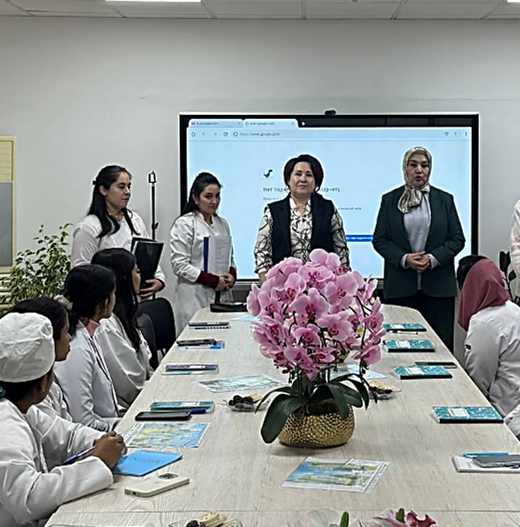 “Peer-to-Peer” – The Motto of the Uzbek–Indian International Medical-Psychological Club
Admission to a higher education institution represents an important milestone in the life of a young person. However, adaptation to a new academic environment may cause significant difficulties for students, especially when studying in a foreign country where it is necessary to adjust not only to the academic environment of the university but also to the sociocultural environment of the host country and local community. Among the difficulties faced by many international students are academic challenges, housing issues, financial difficulties, problems of social acceptance, homesickness, loneliness, and health-related concerns, all of which may negatively affect the psychological well-being of foreign students. These challenges may lead to psychological tension and stress conditions commonly referred to as culture shock.
The results of the survey conducted by us revealed that culture shock is a psychological state experienced by the majority of second-year students from India studying at our university. As the main difficulties of socio-psychological adaptation within the university environment, foreign students identified such external factors as the dominance of the language barrier and the high academic workload in the educational system. It is widely recognized that language serves as a key instrument for academic success, social integration, and the development of a sense of competence. Insufficient language proficiency increases social anxiety, feelings of isolation, and the fear of academic failure.
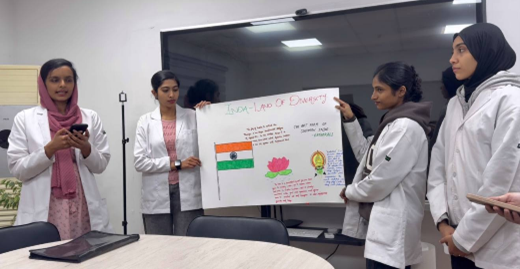 On March 4, the activities of the International Medical-Psychological Club were officially launched at the Department of Pedagogy and Psychology under the leadership of Professor Nadira Gayratovna Kamilova. The club was established with the aim of improving the socio-psychological adaptation of international students. Together with the department’s faculty members, Zukhra Imamalievna Islambekova and Maftuna Tokhirovna Khujakhonova, as well as second-year volunteer students of the Second Faculty of General Medicine, a platform was created where participants from both sides familiarize themselves with the culture, traditions, national cuisine, history, geographical features, social and legal norms of Uzbekistan and India, as well as the mental characteristics of both nations.
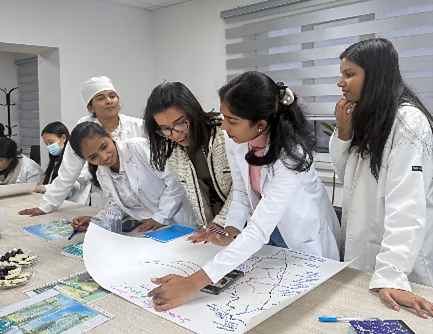 Despite their academic workload, volunteer students Ezoza Bokhodirova, Charos Uktamova, Farzona Ropijonova, and Sevinch Shukhratova, who possess an excellent command of the English language, have taken the initiative and actively contribute to organizing the club’s activities. An important role in the adaptation process is also played by psychological communication and interpersonal interaction trainings conducted by Professor N.G. Kamilova, as well as trainings aimed at developing social and emotional intelligence conducted by lecturer M.T. Khujakhonova. Senior lecturer Z.I. Islambekova teaches club members sign language, a skill that will be essential for future physicians when working with patients who have hearing impairments.
The second meeting of the club was held on March 27 after the celebrations of Navruz and Eid al-Fitr. During this meeting, participants were presented with a presentation about the history and traditions of celebrating these holidays in Uzbekistan, followed by a tea gathering with traditional Eastern sweets. Through communication activities, we attempt to develop basic conversational language skills among foreign students. However, the full mastery of the Uzbek language requires a centralized educational approach involving experienced language instructors.
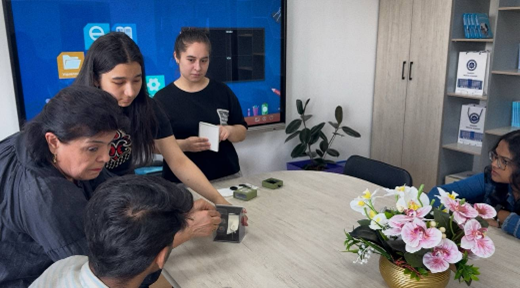 The third meeting of the club took place on April 4 and was dedicated to the development of intercultural communication in the format of a socio-psychological training based on the “peer-to-peer” principle. During the meeting, both international and local students were actively involved in interactive activities, exchanged knowledge about the culture, traditions, and social norms of India and Uzbekistan, and participated in exercises aimed at developing communication skills and mutual understanding. Special interest was generated by elements of cultural exchange, presentations of national traditions, and a segment devoted to students’ psychological well-being. This format of work contributed to reducing intercultural barriers, strengthening trust-based relationships, and further facilitating the successful adaptation of international students to a new social and educational environment.
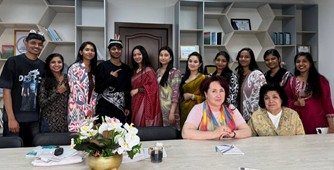 The continuation of this initiative was the fourth meeting of the club held on April 11, during which the thematic scope of the trainings was expanded by incorporating inclusive and professionally oriented components. Participants were introduced to the fundamentals of nonverbal communication and elements of sign language and gained an understanding of the specifics of interacting with individuals who have hearing impairments. This topic generated considerable interest among future physicians. Interactive exercises aimed at developing empathy, communicative competence, and intercultural cooperation, combined with traditional cultural exchange and informal communication, once again confirmed the effectiveness of the club’s activities as a space for social support, professional development, and socio-psychological adaptation of international students. Students from India express a strong desire to learn the state language. The development of language competencies among international students will facilitate and accelerate their integration into Uzbek society, minimize the effects of culture shock, and improve their academic performance. In order to expand intercultural interaction and attract a wider range of participants, the club has opened a page on the social network Instagram (@medpsych_inter.club). This platform highlights the club’s activities, publishes announcements of meetings, training materials, cultural and educational initiatives, and useful information for international students. We invite foreign students to join the club’s activities, participate in its events, and propose their own initiatives. Active and motivated students who possess foreign language skills and are interested in volunteer, educational, and intercultural work are especially welcome to collaborate and contribute to the development of the club.
“Peer-to-peer” is not only the guiding principle of the club’s work but also a space for friendship, support, mutual learning, and professional growth.
